
Why Nairobi matters for flag football fans
The 2026 NFL Flag Africa Continental Championship gives fans a clearer look at how flag football is growing outside its U.S. base.
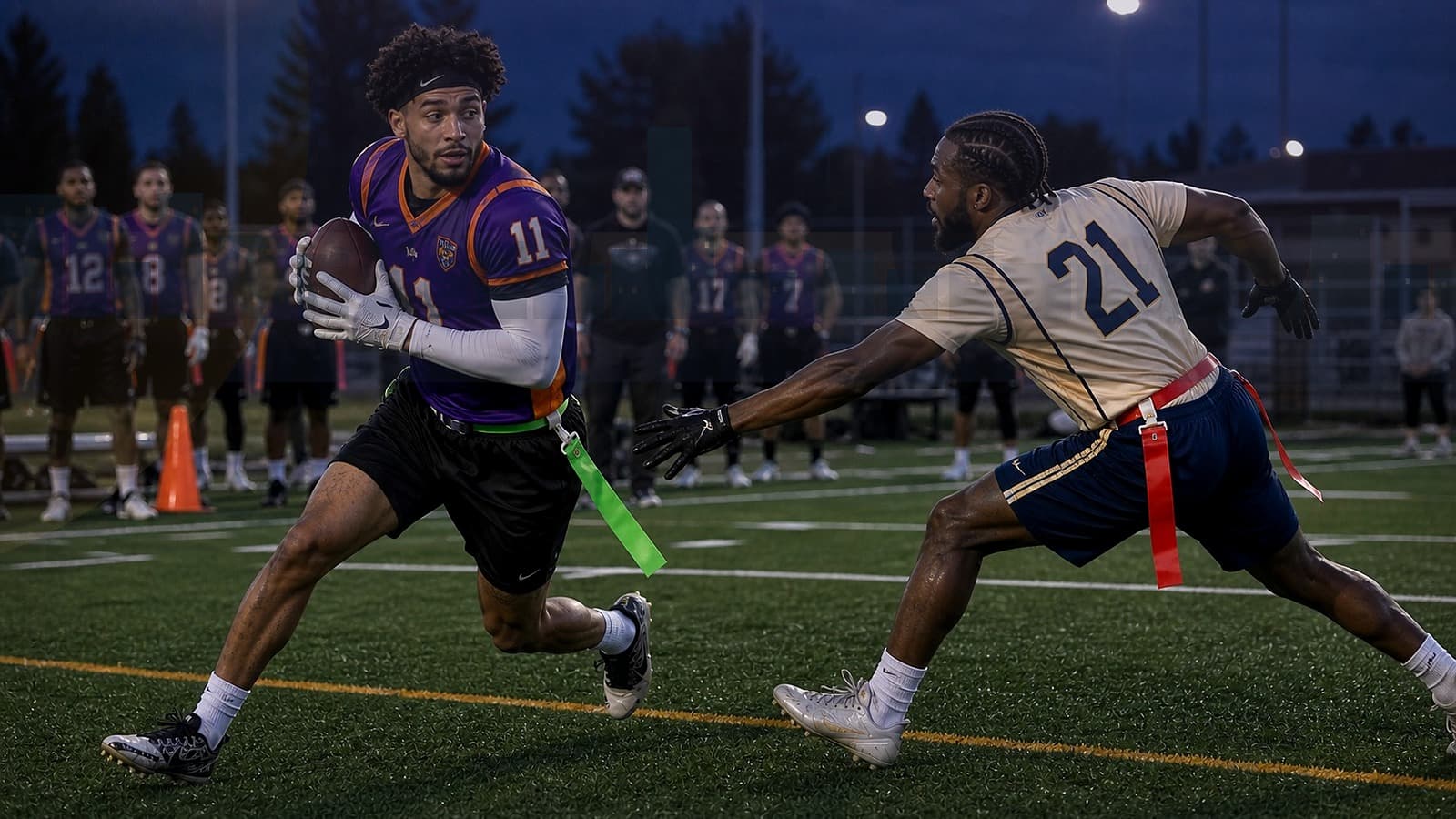
Nairobi is hosting men’s, women’s, and U13 flag football teams from five African nations in July. For fans, the event is a useful test of whether flag football’s next wave can build real regional styles, rivalries, and names before the world championship stage.
A different kind of checkpoint
For U.S. fans, flag football can still feel like a domestic story: NFL FLAG, high school growth, college programs, and the question of which American athletes might one day play on the largest stages.
Nairobi gives that story a useful jolt. The 2026 NFL Flag Africa Continental Championship is scheduled for July 9-11 in Kenya, with men’s and women’s national teams from Ghana, Kenya, Nigeria, Egypt, and South Africa, plus U13 co-ed youth squads from the same five countries.[1]
That is not just a participation headline. It is a fan checkpoint. Five countries in one place means you can begin to compare styles, depth, coaching, athletic profiles, and how quickly newer programs are turning school clinics into national teams.
Africa is building a regional calendar
The Kenya event is the third NFL Flag continental competition held in Africa, following Nigeria in 2024 and Egypt in 2025.[1] That sequence matters. A sport becomes easier to follow when events repeat, countries return, and rivalries have time to become legible.
The July tournament also sits between grassroots development and elite selection. The same week includes an NFL Africa talent identification workout on July 11, giving athletes from across the continent a chance to be evaluated by NFL representatives.[1]
For casual fans, that mix can be confusing at first: youth squads, national teams, NFL development, and international federation pathways all in the same week. But it also shows why flag football is moving quickly. The sport does not need to choose between school participation and high-performance ambition. In emerging markets, those layers are being built at almost the same time.
Kenya did not appear from nowhere
The host country has been preparing for this kind of moment. The Kenyan Federation of American Football says American football in Kenya began in 2012 with a pilot program at the University of Nairobi, and that flag football has since moved into schools, local leagues, coaching clinics, and referee training.[2]
KFAF says Kenya now has 16 active men’s and women’s teams, mostly connected to universities, colleges, community clubs, and school programs.[2] It also describes U12 mixed and U15 split-gender school programs in Nairobi, which is exactly the kind of base a national-team future needs.[2]
The NFL’s public Kenya push also goes back several years. In 2023, the league brought its NFL Africa program to Nairobi with a talent identification camp, an NFL Flag showcase, and training clinics for teachers and KFAF coaches tied to schools in the Kasarani area.[3]
What fans should watch
The first thing to watch is not the scoreboard. It is organization. Do teams substitute cleanly? Do quarterbacks understand when to take the short throw? Do defenders pull flags with patience, or do they fly past the ball carrier?
The second thing is depth. In a five-team continental field, the best athlete on a roster can change a game. The stronger program is the one that still looks organized after the first option is covered or the first defender misses.
The third thing is style. Ghana, Kenya, Nigeria, Egypt, and South Africa are not arriving with identical sports cultures. Some teams may lean on speed and open-field running. Others may look more structured in spacing and timing. For fans, that is the fun of a young international sport: national identities can form before the global hierarchy gets too fixed.
The U.S. angle
This is also useful for American fans because the United States cannot understand flag football’s future by watching only itself. USA Football lists the 2026 IFAF World Flag Championship for August 13-16 in Düsseldorf, Germany, with national teams from 19 countries across five continents.[4]
The U.S. men and women enter that world championship cycle as reigning champions, with USA Football listing the men as No. 1 in the world rankings and the women as No. 2.[4] That makes the U.S. the measuring stick. It does not make the rest of the world background scenery.
Nairobi is one of the places where the next layer of competition is being built. The teams there may not all be ready to challenge the established powers today. But fans should care about where the sport is learning, not only where it is already polished.
That is the reason to pay attention as the July 9-11 event approaches. Flag football’s global growth will not become real because a press release says the game is played in many countries. It becomes real when countries meet, lose, adjust, return, and give fans someone to remember the next time the bracket appears.