
Nairobi’s results made Africa harder to ignore
Nigeria, Egypt, and a fast-forming continental field gave fans real results to track before the next global flag football stages.
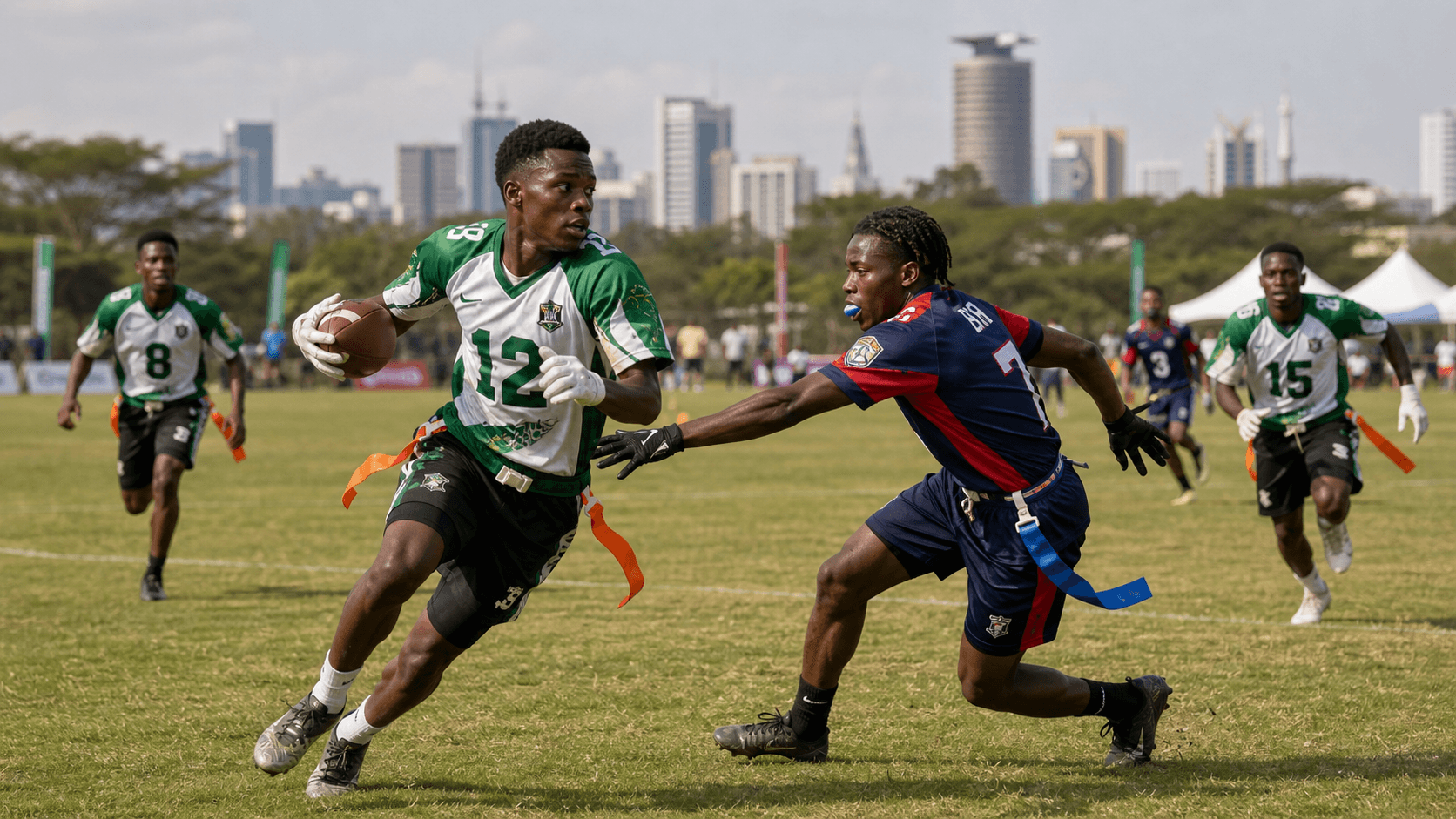
The NFL Flag Africa Continental Championship in Nairobi is no longer just a development story. With Nigeria winning the women’s title, Egypt taking the men’s title, and Nigeria also claiming the youth division, Africa now has recent results that fans can carry into the next month of international flag football.
The results gave the event a shape
Before the tournament, the simple headline was that Nairobi would host a continental flag football event from July 9-11, with men’s, women’s, and U13 teams from Kenya, Ghana, Nigeria, Egypt, and South Africa listed for the event.[1] After the final games, the story became more useful for fans: Nigeria captured the women’s championship, Egypt claimed the men’s championship, and Nigeria’s youth team defeated Ghana for the youth title.[2]
That matters because flag football is still young enough internationally that fans need anchors. A country name, a final, a podium, and a repeatable event tell us more than a general statement about growth.
The result also keeps Africa from being treated as background to the U.S. story. The United States is still the reference point at the top of the sport, but Nairobi gave fans a fresh regional picture: Nigeria looks deep, Egypt has a men’s title to build around, and Ghana is already visible in the youth pathway.
Nigeria showed more than one team
Nigeria’s women winning the senior title is the cleanest result from the weekend. But the more useful fan note is that Nigeria did not leave Nairobi with only one result to discuss.
For a fan, the more important point is the double signal. Nigeria did not only win a senior women’s title. Its youth team also won the U13 competition.[2] That combination suggests a program with current talent and a younger layer behind it.
One tournament does not prove a country is ready to challenge the established powers. It does, however, change what to watch next. If Nigeria keeps appearing in finals across age groups, the story becomes less about a single good roster and more about a real pipeline.
Egypt’s men gave the field balance
Egypt’s men beating Nigeria for the men’s championship is just as important to the shape of the region.[2] If one country had swept every senior division, the takeaway would have been simple. Split titles make the next tournament more interesting.
That balance is good for fans. Regional rivalries become easier to follow when countries trade results, adjust, and come back with something specific to prove. Egypt now has a title that gives its men’s team a clear identity in the African conversation.
The bronze notes also matter. Reporting around the event listed Tunisia on the men’s podium and Egypt on the women’s podium.[2] Even without full box scores, that tells fans the competitive map is wider than one or two countries.
Why this matters before August
The next viewing window comes quickly. USA Football lists the 2026 IFAF World Flag Championship for August 13-16 in Düsseldorf, Germany, with 19 nations from five continents in the field.[3] That makes July’s African results part of the lead-in, not an isolated side story.
There is also a U.S. youth angle this week. The third annual NFL FLAG Championships are scheduled for July 23-26 in Westfield, Indiana, with more than 350 girls’ and boys’ teams expected and live coverage across ESPN platforms, ABC, NFL Network, NFL+, and Disney platforms.[4]
Put those two events next to Nairobi and the month starts to make sense. Youth flag in the U.S. is getting a larger broadcast window. Africa just produced fresh continental champions. The World Championship is less than a month away.
For fans, the job is simple: remember the names of the countries now. Nigeria, Egypt, Ghana, and Tunisia are not just participation notes. They are part of the international scoreboard that will make the road to LA28 easier to follow.